Lars reviewed Brave New World by Aldous Huxley
None
5 stars
4.6
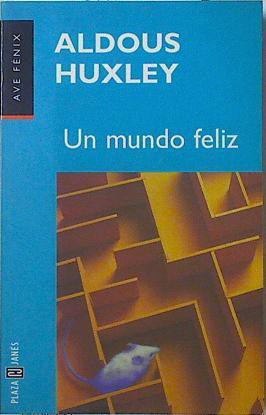
Paperback, 255 pages
Spanish language
Published Nov. 30, 1998 by Plaza & Janés.
En este libro visionario escrito en 1932, Aldous Huxley imagina una sociedad que utilizaría la genética y el clonaje para el condicionamiento y el control de los individuos. En esta sociedad futurista, todos los niños son concebidos en probetas. Ellos son genéticamente condicionados para pertenecer a una de las 5 categorías de población. De la más inteligente a la más estupida: les Alpha (la élite), los Betas (los ejecutantes), los Gammas (los empleados subalternos), los Deltas y los Epsilones (destinados a trabajos arduos). "El mundo feliz" describe también lo que seria una dictadura perfecta que tendría la apariencia de una democracia, una cárcel sin muros en el cual los prisioneros no sonarían en evadirse. Un sistema de esclavitud donde, gracias al sistema de consumo y el entretenimiento, los esclavos "tendrían el amor de su servitud".
4.6
Read in and for English class in school. Would likely not have read it on an other occasion, although the themes and things discussed are thought provoking, I didn't really enjoy the book.
I guess it might be the point of the book, but I couldn't feel that any character was real, everything felt stereotypical; while at the same time that "prediction" of the future does not seem plausible to me.
And I repeat, it might be the point of the book, so, if that is the case, then great job. I just did not enjoy it or gained any interesting insight.
What we remember most is how disappointed we were that the story spun all the wonderful potential benefits of science into a dystopia where class and capitalism prevailed. The book disturbingly portrays how a society with admiral goals can go wrong with rigid and fanatical application. Society, it is to flourish, it needs to be open and alive.
Read this immediately afte reading the Orwell classic, 1984. I admit, I struggled reading this book. The method of story telling, with the switching of character perspective was difficult to follow. The idea of the book became far more clearer as the book progressed and became clear especially towards the end.
However the ideas presented in the book and their demonstration was thought provoking.
There is much to be learned from reading this book and it is easy to forget that it was written early in the last century, not this one. Sadly, the warnings Huxley offers about what society was becoming were largely ignored and we've come to a society that so closely mirrors his "civilization" that it could have been a metaphor about our current state of affairs written by a contemporary author.
It is a very short novel but full of warnings and lessons that are as applicable, or even more so, today as they were in 1930. It is a lesson in mass manipulation by the media and big pharma. It is a lesson in treating people ultimately as mere resource rather than persons. And it is a lesson in extremes, extreme pain v. extreme pleasure and the wrongheadedness in submitting to either.